User Interface Dynamics Driving Progression Through Loyalty Levels in Cross-Format Mobile Gaming Apps
Written by Uma Braun · Jul 30, 2026
User Interface Dynamics Driving Progression Through Loyalty Levels in Cross-Format Mobile Gaming Apps
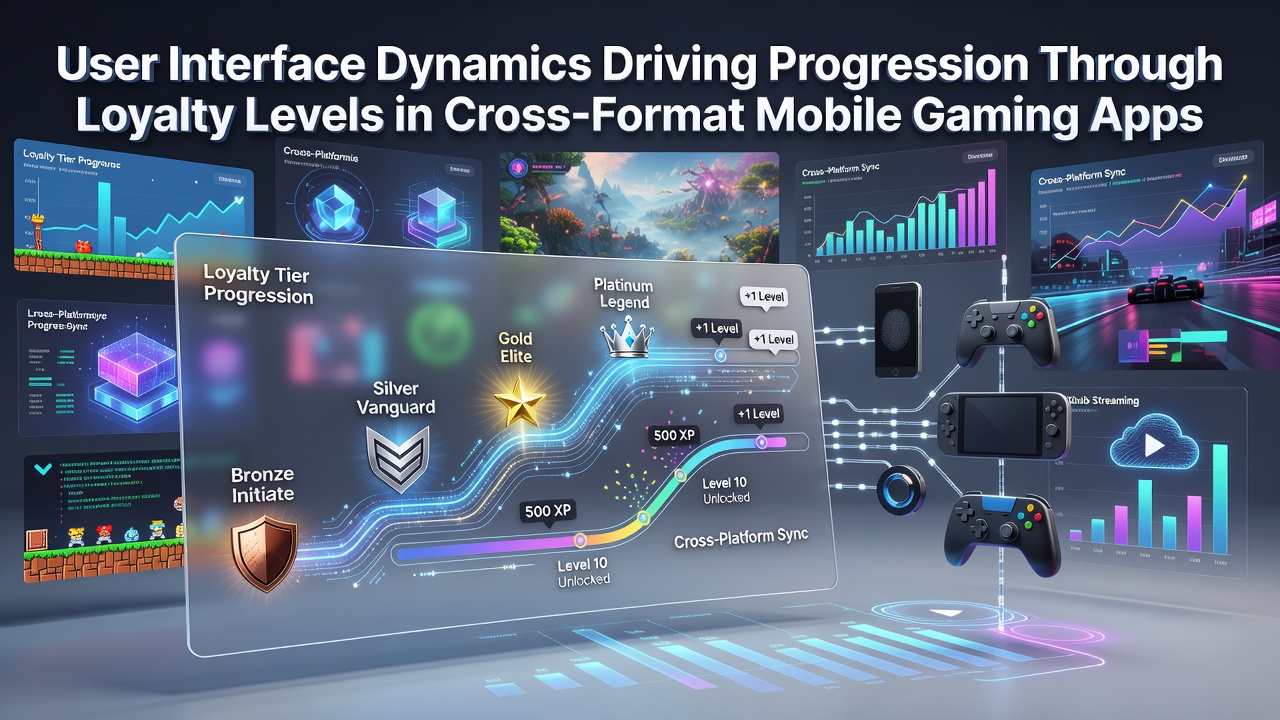
Cross-format mobile gaming apps integrate loyalty systems that span mobile, tablet, and connected device experiences, and user interface elements shape how players advance through successive reward tiers. Developers design these systems so that visual cues, navigation flows, and feedback mechanisms align with player actions across platforms, which in turn supports sustained engagement with layered incentive structures.
Progress bars appear prominently on home screens and profile pages, displaying accumulated points and the distance to the next tier in real time. These bars update immediately after each session, whether the user plays on a smartphone during a commute or continues on a tablet at home. Color gradients shift from neutral tones at lower levels to saturated hues at higher tiers, creating a visual distinction that highlights advancement without requiring separate menu navigation.
Core Interface Components That Support Tier Advancement
Notification systems deliver timed alerts when milestones approach, yet they remain non-intrusive within the overall layout. Researchers tracking app analytics note that such alerts correlate with increased session frequency when positioned consistently across device formats. Dashboard summaries consolidate daily, weekly, and monthly activity into single views, allowing users to compare their current standing against previous periods without switching applications.
Menu hierarchies organize loyalty-related content under expandable sections that mirror the same structure on every supported platform. This consistency reduces the cognitive load when players switch devices mid-progression, because the location of tier information stays predictable. Interactive elements such as tappable achievement icons expand to reveal detailed criteria, and these expansions maintain identical layout logic whether accessed through touch or controller input.
Cross-Platform Synchronization and Visual Feedback
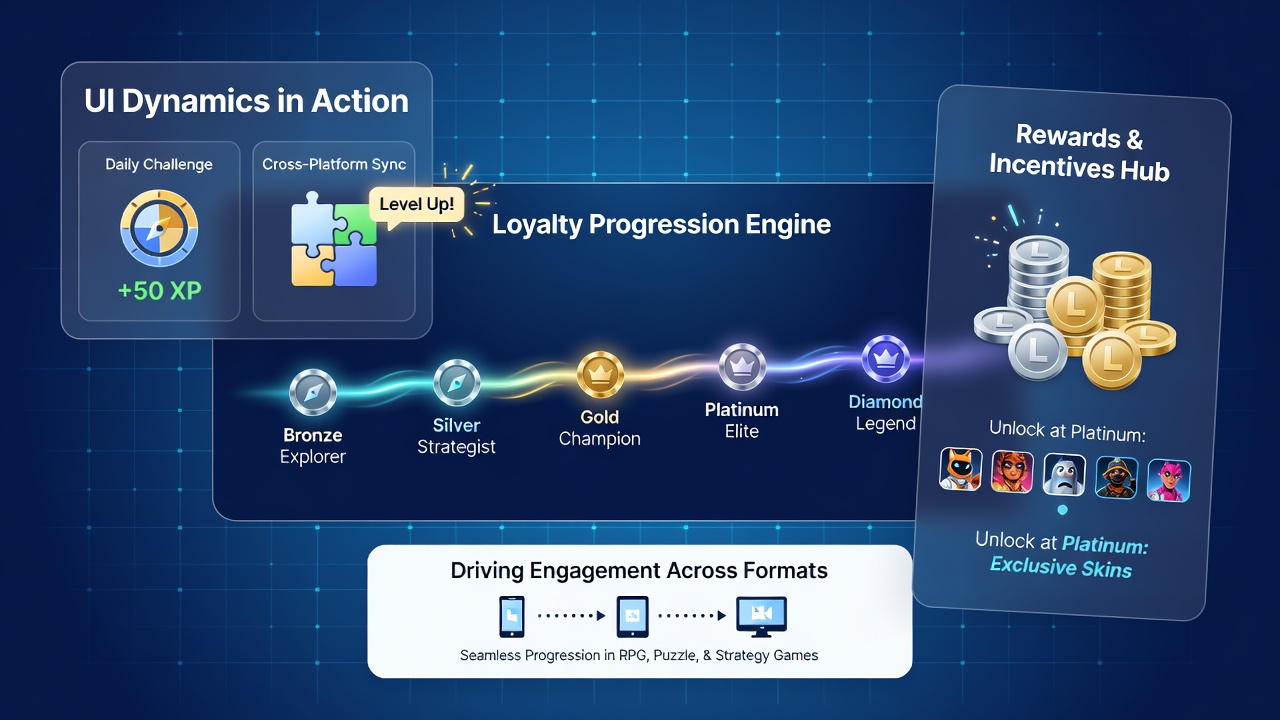
Synchronization protocols ensure that loyalty data reflects instantly across formats, and interface animations reinforce this continuity. A completion animation on one device triggers a matching sequence on another device once the session syncs, which maintains the sense of continuous progression. Data from industry reports released in July 2026 indicate that apps employing unified animation libraries across platforms record higher retention rates at mid-tier levels compared with those using device-specific visual treatments.
Button placement follows established ergonomic patterns so that primary actions, such as claiming rewards or viewing tier benefits, occupy the same screen regions regardless of orientation or device size. Observers have documented that this spatial consistency lowers the time users spend locating functions, thereby increasing the frequency of reward redemptions and subsequent point accumulation.
Design Patterns Observed in Multi-Format Loyalty Systems
Many applications segment loyalty interfaces into modular panels that adapt to screen dimensions while preserving information hierarchy. A panel listing tier benefits on a phone might stack vertically, whereas the same panel on a larger tablet arranges items side by side, yet the sequence and labeling remain identical. This adaptive layout supports seamless transitions between formats without forcing users to relearn navigation.
According to figures released by the Entertainment Software Association, loyalty feature adoption in cross-format titles increased steadily through the first half of 2026. Those who study player behavior note that apps providing clear visual mapping of point multipliers at each tier experience more rapid movement from entry-level to intermediate status. Multipliers appear as inline text within benefit lists, and their presentation updates automatically when a user qualifies for a new bracket.
Progression paths often incorporate milestone markers that function as both visual landmarks and interactive checkpoints. Tapping a marker opens a concise summary of actions required to reach it, and these summaries sync across devices so the same information displays whether the player checks status on a phone or a connected console. Industry organizations such as the Interactive Games and Entertainment Association have compiled regional data showing similar interface strategies employed by developers targeting markets in North America and the Asia-Pacific region.
Conclusion
User interface dynamics in cross-format mobile gaming apps operate through consistent visual language, synchronized data presentation, and adaptive layout structures that collectively guide players through loyalty tiers. These elements appear across multiple studies of player retention and activity metrics, demonstrating measurable associations with progression speed and feature utilization. As developers continue refining synchronization protocols and feedback mechanisms, the role of interface design in shaping loyalty advancement remains a central consideration in cross-platform game architecture.