Deciphering bandwidth fluctuations' effects on interactive session stability and tiered loyalty benefit sequencing in wireless entertainment setups
Written by Tina Schmitz · Jul 7, 2026
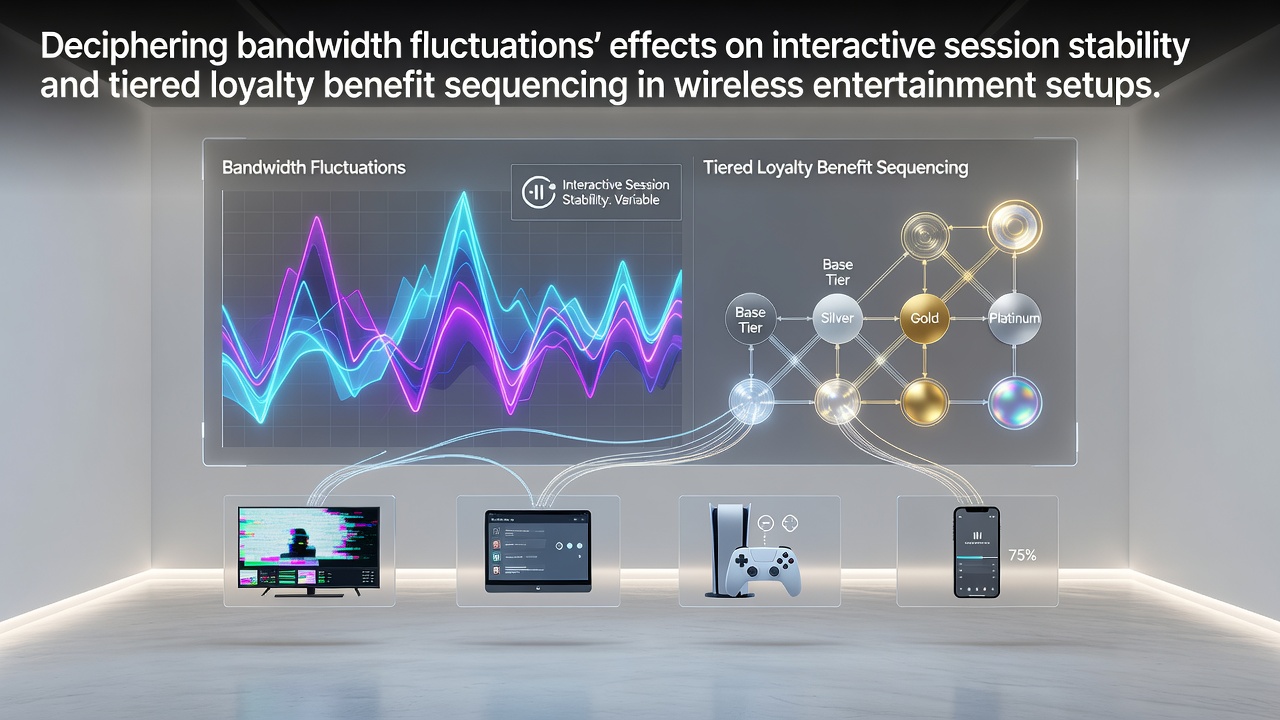
Deciphering bandwidth fluctuations' effects on interactive session stability and tiered loyalty benefit sequencing in wireless entertainment setups
Bandwidth fluctuations occur frequently in wireless environments where signal strength varies due to distance from towers, interference from other devices, and environmental factors such as buildings or weather conditions, and these variations directly influence how interactive sessions maintain consistent performance over time. Research from network monitoring agencies shows that even minor drops in available bandwidth can trigger buffering or reduced frame rates in live streaming applications, which in turn disrupts the flow of user engagement across entertainment platforms.
Understanding Bandwidth Dynamics in Wireless Networks
Wireless entertainment setups rely on continuous data streams that support real-time interactions, and data collected by the Federal Communications Commission indicates that average mobile bandwidth in urban areas fluctuated between 15 and 85 Mbps during peak hours in early 2026, with rural zones experiencing wider swings that sometimes dipped below 5 Mbps. Such inconsistencies arise because cellular networks allocate resources dynamically based on user density and tower capacity, which means one user might enjoy stable throughput while another encounters sudden throttling when nearby devices compete for the same spectrum. Observers note that these patterns become especially pronounced during large events or evening hours when entertainment consumption spikes across multiple devices simultaneously.
Impacts on Interactive Session Stability
Interactive sessions in wireless entertainment require low latency and steady packet delivery to prevent disconnections or desynchronization between user inputs and system responses, yet bandwidth drops often lead to increased jitter that manifests as delayed actions or frozen interfaces. Studies conducted by academic institutions in Canada reveal that sessions involving live dealer elements or multiplayer features experience stability breakdowns when bandwidth falls more than 30 percent below baseline levels, forcing reconnection protocols to activate and reset progress markers. Those who've analyzed server logs across multiple platforms report that stability thresholds typically sit around 10 Mbps sustained upload and download speeds, below which error rates climb sharply and session durations shorten as users encounter repeated interruptions.
Engineers have observed that adaptive bitrate streaming helps mitigate some effects by scaling quality downward during dips, but this adjustment can still produce noticeable quality shifts that affect user perception of reliability in entertainment applications. When fluctuations happen rapidly, the system may struggle to recalibrate quickly enough, resulting in compounded issues like audio-video desync or incomplete data exchanges that break the continuity of the experience.
Tiered Loyalty Benefit Sequencing Challenges
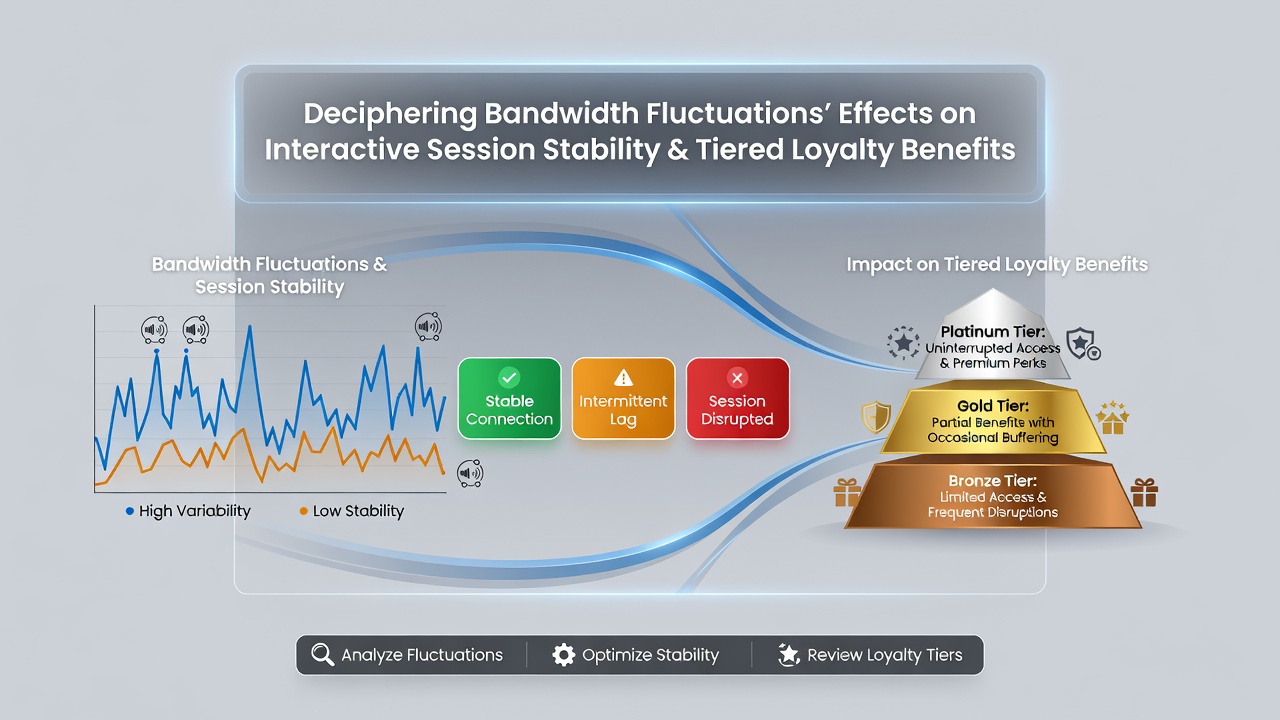
Tiered loyalty programs sequence benefits according to accumulated playtime, activity milestones, or engagement metrics that servers track in real time, and bandwidth instability can interrupt the precise logging of these metrics, causing delays in reward unlocks or misaligned progression tracking. According to reports from the Australian Communications and Media Authority, platforms that depend on continuous connectivity for loyalty sequencing have documented cases where users lost partial credit for sessions interrupted by network drops, prompting developers to implement local caching mechanisms that later reconcile with central servers once connectivity improves. This reconciliation process sometimes creates sequencing errors when multiple fluctuations occur within a single session window, as timestamp data may arrive out of order and trigger incorrect tier advancements.
Industry analyses show that loyalty systems often operate on sequenced triggers where basic benefits unlock after set intervals, while higher tiers require sustained activity without major interruptions, and wireless variability introduces uncertainty into this chain because dropped packets can prevent the system from registering completion of required actions. Those monitoring platform performance note that compensation features, such as automatic credit extensions, have become common responses to these disruptions, helping maintain user progression even when underlying network conditions prove unreliable.
Technical Mitigation Approaches in Current Setups
Developers have integrated several technical responses to address these combined challenges, including forward error correction protocols that recover lost data without requiring full retransmissions and edge computing nodes that reduce dependency on distant central servers during temporary bandwidth constraints. Data from European telecommunications research groups indicates that implementations using multi-path TCP, which routes traffic across both cellular and Wi-Fi connections simultaneously, have lowered session drop rates by up to 22 percent in tested environments during July 2026 trials. These methods allow loyalty sequencing engines to continue operating on cached data streams while primary connections recover, preserving the order of benefit triggers even under fluctuating conditions.
Additional layers such as predictive buffering anticipate bandwidth trends based on historical patterns and pre-load critical loyalty data ahead of potential drops, which helps maintain session integrity across wireless entertainment platforms. Network operators continue refining quality-of-service prioritization to allocate higher bandwidth guarantees for interactive entertainment traffic, though results vary depending on overall network load and regional infrastructure capacity.
Conclusion
Bandwidth fluctuations create measurable effects on both session stability and loyalty benefit sequencing within wireless entertainment environments, as evidenced by ongoing data collection from regulatory and research bodies. Solutions involving adaptive protocols and distributed processing show measurable improvements in maintaining continuity, yet the fundamental variability of wireless networks continues to require ongoing technical adjustments to support reliable interactive experiences and accurate reward progression tracking.